

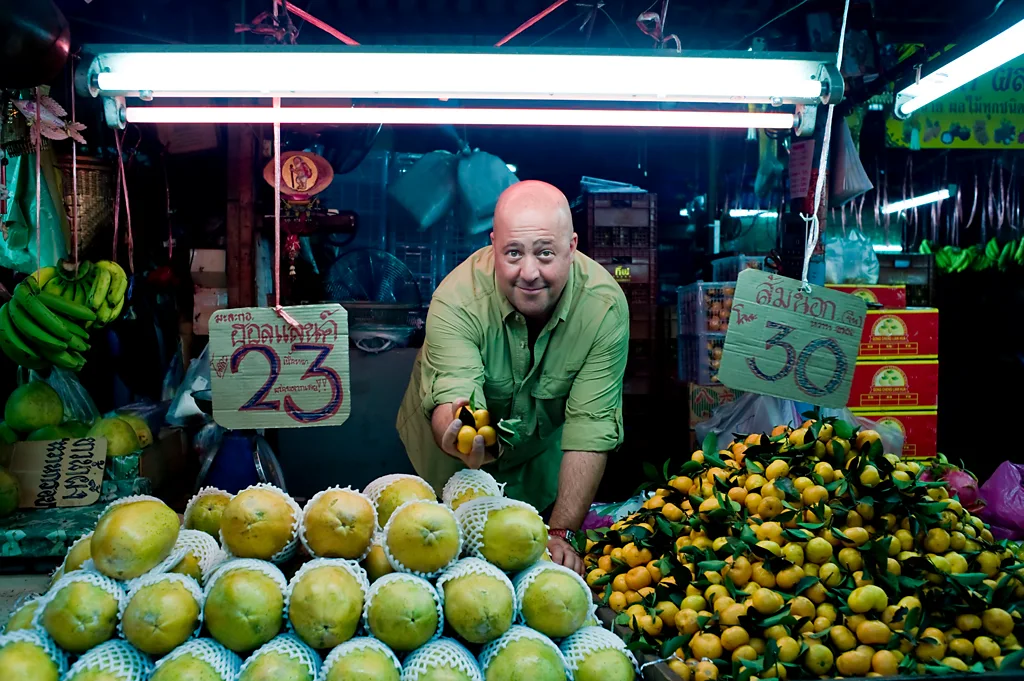
For Andrew Zimmern, food is far more than something served on a plate. The celebrity chef, television personality, author and passionate traveller believes cuisine offers one of the clearest ways to understand a culture, its people and its history.
Zimmern has spent decades travelling around the world and exploring everything from celebrated restaurants to traditional local kitchens. Through his work on the Bizarre Foods franchise, he became known for trying unusual dishes and discovering culinary traditions far beyond the familiar.
But among the countless meals he has experienced, five stand out as particularly meaningful.
Each meal represents a different chapter of Zimmern’s life, from the moment he realised that food would become his career to encounters with culinary legends and family traditions that stayed with him for decades.
Who Is Andrew Zimmern?
Andrew Zimmern is an award-winning television host, chef, author and food advocate. He is best known for creating and hosting the Bizarre Foods television franchise, which took viewers around the world to explore unusual ingredients, traditional dishes and local food cultures.
A four-time James Beard Award winner and Emmy winner, Zimmern continues to explore food and travel through projects focused on regional cuisines and rare culinary traditions.
His five memorable meals reveal not only his extraordinary culinary experiences but also the people, places and traditions that influenced his approach to food.
1. Liver Pâté at Restaurant Paul Bocuse in Lyon, France
One of Zimmern’s most important food memories began when he was just 14 years old.
In 1976, Zimmern was travelling in France while skiing in Val-d’Isère. Heavy snowfall left him and his travelling companions stranded for several days. Once they were finally able to leave, the group travelled to Lyon, where Zimmern experienced his first meal at the legendary Restaurant Paul Bocuse.
The young Zimmern ordered the restaurant’s largest tasting menu, which consisted of 15 courses. The meal included spectacular dishes such as chicken prepared inside a pig’s bladder and truffle soup served beneath an impressive pastry dome.
However, it was a small serving of warm liver pâté that left the biggest impression.
Served with a wine-and-liver sauce, the dish immediately captivated Zimmern. He asked the restaurant staff if he could have another serving, an unusual request from such a young diner.
That request eventually brought legendary chef Paul Bocuse himself to Zimmern’s table.
Bocuse asked if he really wanted another portion. Zimmern enthusiastically said yes, explaining that it was the best thing he had ever tasted.
Another serving soon arrived.
More than simply an extraordinary meal, the experience showed Zimmern what a professional kitchen could accomplish. He noticed the restaurant’s garden, fresh vegetables being harvested, bread being prepared during service and butter being made in-house.
The experience convinced him that the world of food was much larger than he had imagined and cemented his decision to pursue a career in the culinary world.
2. Grilled Aubergine and Corn Soup at Hokusai Fine Dining, Japan
Zimmern’s second unforgettable meal came after years of admiration for Japanese chef Kiyomi Mikuni.
Zimmern first became fascinated with Mikuni’s work in the early 1980s. The chef was known for combining French culinary techniques with Japanese ingredients and traditions, an approach that deeply influenced Zimmern when he was a young cook.
For years, Zimmern travelled to Japan without getting the opportunity to meet his culinary hero.
That finally changed during a recent trip.
Zimmern made a point of visiting one of Mikuni’s restaurants, located aboard the Mitsui Fuji Princess, a ship travelling toward South Korea. Although the meal came with a significant price tag, Zimmern considered the opportunity too important to miss.
The menu combined French cooking with distinctly Japanese ingredients.
Among the memorable dishes were grilled aubergine served with greens, olive oil and shallots, alongside grilled eel and its crisped bone. Another highlight was a corn soup built over a layer of beef consommé gelée.
Japanese corn gave the soup a local character, while a tempura sweet fish added another unusual element to the dish.
Mikuni also spent considerable time with Zimmern and his group during the meal.
Rather than being disappointed by meeting one of his culinary heroes, Zimmern found Mikuni warm, humorous and generous.
The experience became one of the chef’s most memorable meals and, according to Zimmern, the finest food he has experienced on a cruise ship.
3. Liver Crostini at Trattoria Sostanza in Florence, Italy
Some of Zimmern’s most meaningful food memories are connected to his family, and his experiences at Trattoria Sostanza in Florence are a perfect example.
His father first visited the restaurant while honeymooning with Zimmern’s mother in the 1950s. Years later, he introduced his son to the same restaurant.
At that time, Trattoria Sostanza had a remarkably traditional atmosphere, with communal tables, an open kitchen and a handwritten menu.
Zimmern returned repeatedly throughout his life and watched the restaurant and its staff evolve while many of its traditions remained intact.
One dish remained particularly special: crostini di fegato, or liver crostini.
The traditional preparation involved slices of day-old bread topped with a rich, hot liver mixture. The dish was simple but intensely flavorful, and it became one of Zimmern’s favourite foods.
The restaurant’s cooking methods also fascinated him. Ingredients and kitchen scraps were continually added to a pot along with chopped liver and other organs, while leftover wine could also find its way into the mixture.
For Zimmern, the dish represented more than taste.
Returning to the restaurant with his father and eating food that had remained part of the establishment’s identity for decades taught him an important lesson about restaurants, traditions and continuity.
The restaurant could evolve over time while still preserving the qualities that made it special.
4. Tuna Cheek and Jawbone at Badjao Seafood House, Palawan, Philippines
Zimmern’s love of seafood made a visit to Palawan particularly memorable.
The Philippine island has a long connection to the sea, and Zimmern wanted to experience a seafood meal that reflected the region’s relationship with the water.
The restaurant itself was unlike a conventional dining establishment.
Badjao Seafood House is located in a wooden structure built over the water. Diners reach the restaurant at the end of a dock, while an opening in the floor provides direct access to the water below.
The setting immediately connects the meal to the surrounding environment.
Fresh seafood is brought up from the water and prepared for diners, creating an experience in which the journey from the sea to the plate is remarkably short.
Among the dishes Zimmern remembers most vividly was tuna cheek and jawbone.
For a chef and traveller who has spent much of his career searching for authentic food experiences, the meal represented exactly what makes regional cuisine so fascinating: fresh ingredients, traditional preparation and a direct connection between food and the people who produce it.
The experience also demonstrated why seafood tastes particularly meaningful in communities whose history and livelihoods are closely tied to the ocean.
5. A Meal That Became Part of Zimmern’s Culinary Story
Across these five meals, a clear pattern emerges in Zimmern’s food philosophy.
His most memorable dining experiences were not necessarily defined by the most expensive ingredients or elaborate presentations. Instead, they were shaped by discovery, tradition, family, craftsmanship and the people behind the food.
The liver pâté at Restaurant Paul Bocuse helped convince a teenager that he belonged in the culinary world. His encounter with Kiyomi Mikuni fulfilled a decades-long professional fascination. The liver crostini in Florence connected him with his father’s memories and taught him about culinary continuity.
Meanwhile, the seafood experience in Palawan demonstrated the importance of understanding where food comes from and how deeply it can be connected to a community.
For Zimmern, these meals ultimately tell a story about travel itself.
Food as a Way to Understand the World
Zimmern’s approach to travel is rooted in the belief that food provides a window into people’s lives.
A local dish can reveal a region’s history, geography, traditions and relationship with its surroundings. A restaurant can preserve family memories, while a chef can introduce new ways of combining culinary cultures.
That is why Zimmern’s five unforgettable meals feel less like a conventional list of favourite dishes and more like a culinary autobiography.
From a life-changing dinner in France to traditional food in Italy and a seafood experience in the Philippines, each meal represents a moment that changed how he viewed food.
After decades of travelling and eating around the world, Zimmern’s most treasured meals are ultimately reminders that the best food experiences are often about much more than what’s on the plate.