
Protecting the Voice: Taylor Swift’s Bold Legal War Against AI Identity Theft
Taylor Swift is no stranger to fighting for control over her work, but her latest battle isn’t over masters—it’s over her own identity. On April 27, reports confirmed that the “Opalite” singer has filed three major trademark applications to shield her voice and image from the growing threat of generative AI.
The Signature “Sound Marks”
In a move that could change how celebrities protect themselves, Swift’s company filed for sound marks on April 24. These trademarks cover her iconic vocal introductions: “Hey, it’s Taylor Swift” and “Hey, it’s Taylor.” By securing these vocal signatures with the U.S. Patent and Trademark Office, Swift gains a powerful legal weapon. It allows her team to strike down unauthorized AI deepfakes, “fan” covers, and ads that use her unique tone to deceive listeners or profit from her name.
Read more ; Zayn Malik New Project 2026: Singer Teases “Teamwork” After Album Launch
The Visual Shield
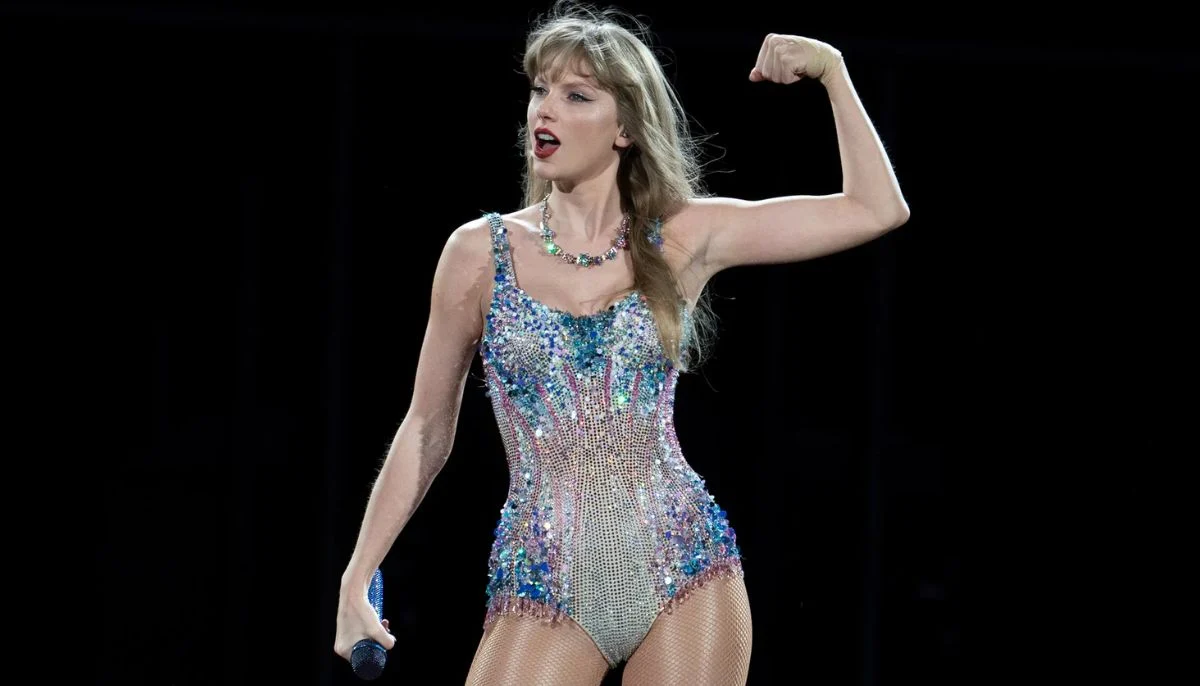
Beyond her voice, Swift is protecting her most recognizable tour aesthetic. The third filing is a highly specific visual trademark of a photograph featuring her holding a pink guitar while wearing a multi-colored iridescent bodysuit and silver boots.
View this post on Instagram
This move effectively blocks AI companies from training models to generate “new” images of her that replicate her high-value brand identity. It’s a clear message: her image belongs to her, not to an algorithm.
The New Hollywood Resistance
Swift isn’t standing alone. Oscar-winner Matthew McConaughey has joined the movement, filing his own applications to protect his signature drawl.
As AI tools become more sophisticated at mimicry, Hollywood’s elite are shifting their strategy. They are moving away from simple copyright claims and toward trademark law to ensure that their digital “twins” cannot be exploited. For Swift, this is another chapter in a career-long mission to ensure that creators—not corporations or code—remain in the driver’s seat.a