

A Generalist’s Guide to the First American Pope
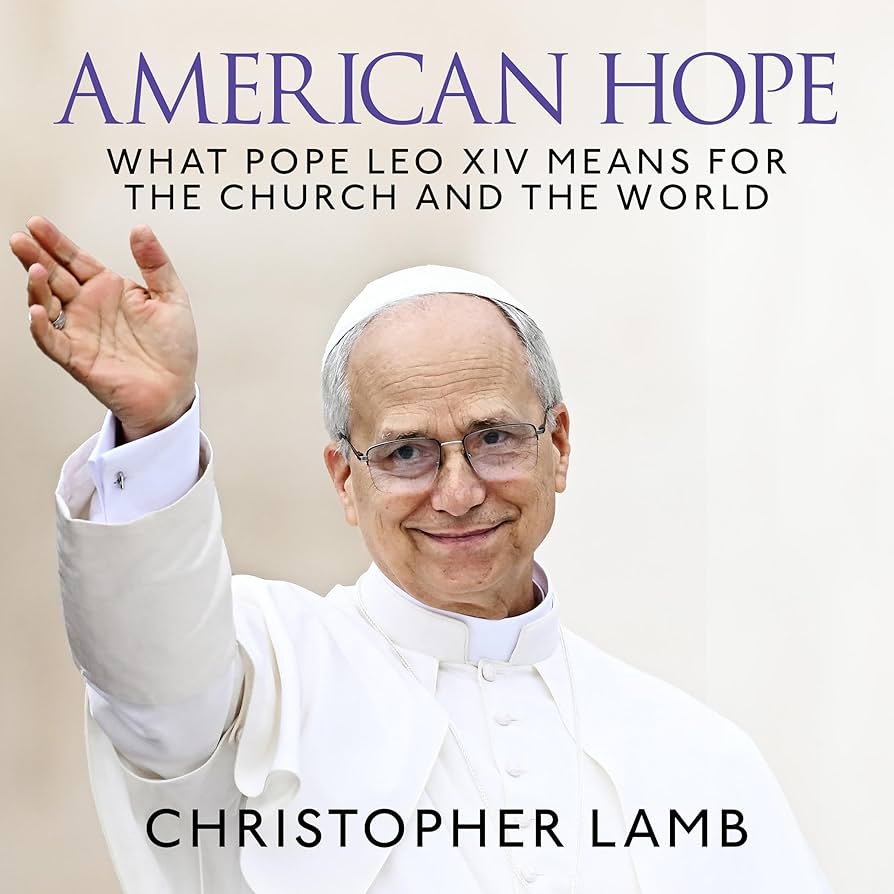
In her latest review, Melanie McDonagh takes aim at Christopher Lamb’s new release, American Hope: What Pope Leo XIV Means for the Church and the World (Headline, £25). While Lamb—the CNN Vatican correspondent and former Tablet columnist—provides a thorough “roundup” of the challenges facing Pope Leo XIV (Robert Prevost), McDonagh argues the book struggles to step out of the shadow of Elise Allen’s more intimate biography.
Rather than a deep-dive life story, Lamb’s work functions as an analysis of how Leo’s personality—that of a mathematician, lawyer, and Augustinian—collides with a modern, fractured Church.
The “Steely” Mathematician: Leo’s Governing Style
Lamb emphasizes the Pope’s background in the Order of St. Augustine as the blueprint for his papacy. McDonagh notes several key “obvious truths” Lamb applies to the current pontificate:
The Unifier: Leo is praised for his “listening skills” and collaborative approach, a stark contrast to the polarized political climate of his home country.
The Numbers Man: Having taught high school maths, Leo is presented as uniquely qualified to clean up the “hair-raising” Vatican financial scandals, specifically the disastrous Sloane Avenue investment in London.
The Ethical Listener: Lamb suggests Leo’s ability to convene experts will be vital in tackling the moral minefield of Artificial Intelligence.
McDonagh’s critique, however, is that these observations are “valid, but not especially remarkable,” leaving the reader with a “primer” that feels stretched to book length.
Read more; Top 10 Definitive HBO Series, Ranked
The Neuralgic Issues: Abuse and Liberalism
One area where the review finds genuine substance is in Lamb’s account of Leo’s time as a Bishop in Peru.
Sodalitium Christianae Vitae: The book details Leo’s firm stance against this conservative organization following revelations of sexual abuse.
A Necessary Corrective: McDonagh identifies a “neuralgic” point in the book: Leo’s refusal to let the Church be defined solely by the abuse scandal. While Lamb worries this might seem dismissive, McDonagh views it as a vital step toward a broader ministry.
The Critical Verdict: “Awfully Dull”
The review’s sharpest barbs are reserved for the book’s ideological leanings. McDonagh suggests Lamb equates “decency with a liberal approach” on hot-button issues like:
Communion for the divorced and remarried.
Blessings for same-sex couples.
The Traditional Latin Mass (where McDonagh questions if Leo will follow the “eirenic approach of Benedict” or the “authoritarianism of Francis”).
Ultimately, while the book is described as well-intentioned and a decent starting point for those unfamiliar with the current Vatican, McDonagh concludes that it fails to offer the “steely” or “inspiring” portrait the first American Pope deserves.