

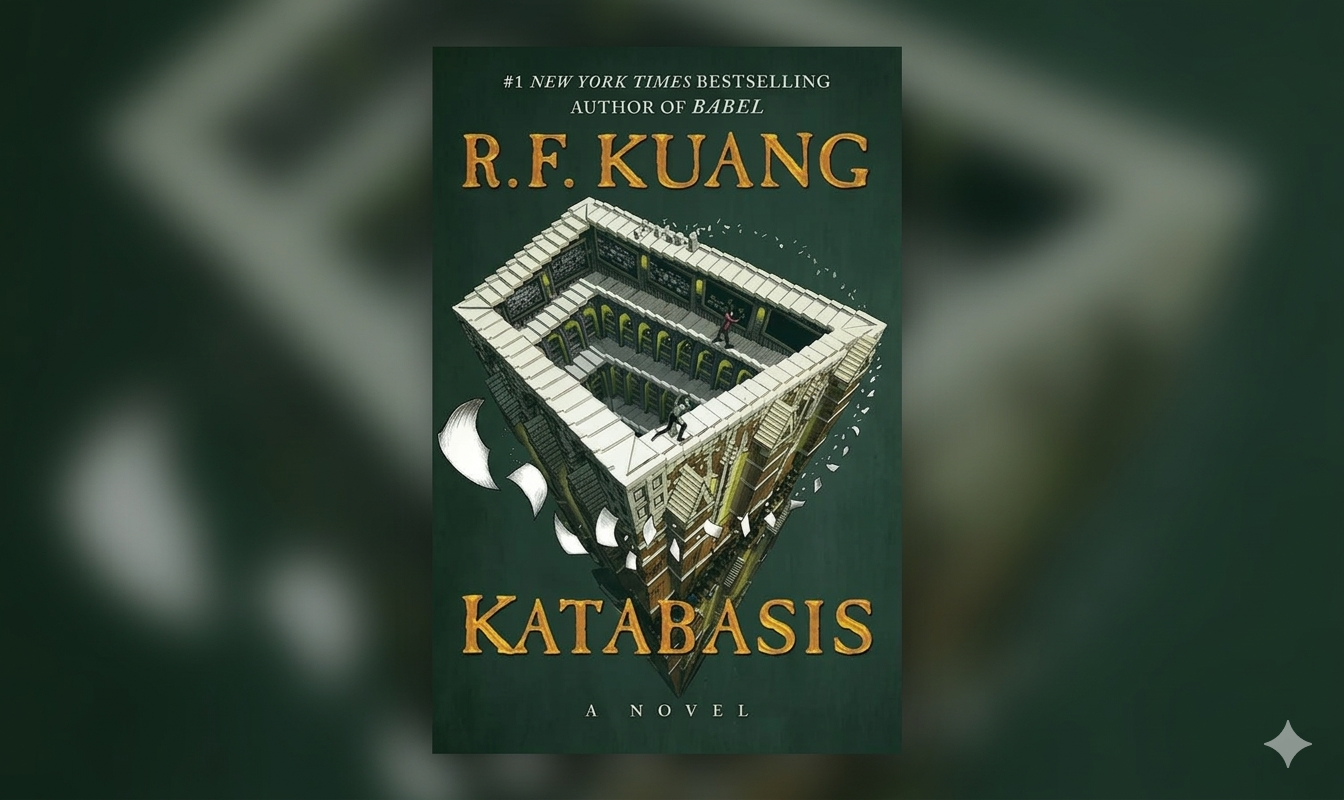
Having gained considerable fame for satires like Yellowface, Rebecca (RF) Kuang returns with her latest endeavor, Katabasis, a fantasy novel that literally takes readers to the underworld. While the marketing machinery has hailed it as a “modern classic,” the narrative—rooted heavily in the grueling world of academia—struggles to move beyond its own intellectual self-indulgence.
The Plot A Ph.D. Journey to Hell
The term katabasis refers to a hero’s journey to the underworld (think Orpheus or Aeneas). In Kuang’s alternate reality, the journey is fueled by a very modern anxiety: the need for a letter of recommendation.
The story begins at Cambridge University when protagonist Alice Law’s adviser, Jacob Grimes, is vaporized in a magical experiment gone wrong. Terrified that her career is over without Grimes’ connections, Alice prepares to venture into the underworld to retrieve him. She is joined by Peter Murdoch, a rival student from Oxford, and together they navigate seven levels of hell: Pride, Desire, Greed, Wrath, Violence, Cruelty, and Tyranny.
Read more ; The Death of the Fantasy How ‘The Devil Wears Prada 2’ Reflects a Dying Media Landscape
Academia as the Ultimate Horror
Kuang, who holds degrees from Georgetown, Oxford, and Cambridge, and is currently at Yale, draws heavily from her own experiences. The novel is at its strongest when depicting the “dark heart” of academic life:
The Power Struggle: The “Shades” (souls) they encounter are often gifted individuals who took their own lives, unable to cope with the “obscene pressures” and rivalries of elite institutions.
The Abusive Mentor: Jacob Grimes is revealed not as a hero to be saved, but as a narcissist who subjected his students to mental cruelty.
The Reality of Error: A pivotal plot twist reveals that Peter and Alice were actually responsible for the error that killed Grimes—a nod to how meticulous academic work can lead to life-altering mistakes.
Where the Narrative Fails
Despite its strengths, Katabasis often feels like a young-adult novel masquerading as high literature. The “obsessive focus” on logic puzzles and mathematical paradoxes begins to grate by the midpoint, and the pacing is uneven—while “Pride” is meticulously detailed, the level of “Tyranny” is barely addressed.
The protagonist, Alice, serves as an obvious alter ego for Kuang. As the book progresses, the author seems less interested in refining the adventure and more invested in making the reader “sympathize with how much Alice has been through.”
The Verdict Marketing Over Merit?
While the book is entertaining and well-written, it lacks the visionary clarity of true genre classics like Dune. Scenes like the heroine feeding on a cat’s viscera feel like shock value rather than genius.
Ultimately, Katabasis is a political statement on identity and the academic ivory tower, but as a piece of timeless fiction, it falls short of its lofty promises. It is a worthwhile read for those with time to spare, but it serves more as a mirror of Kuang’s personal grievances than a universal masterpiece.