


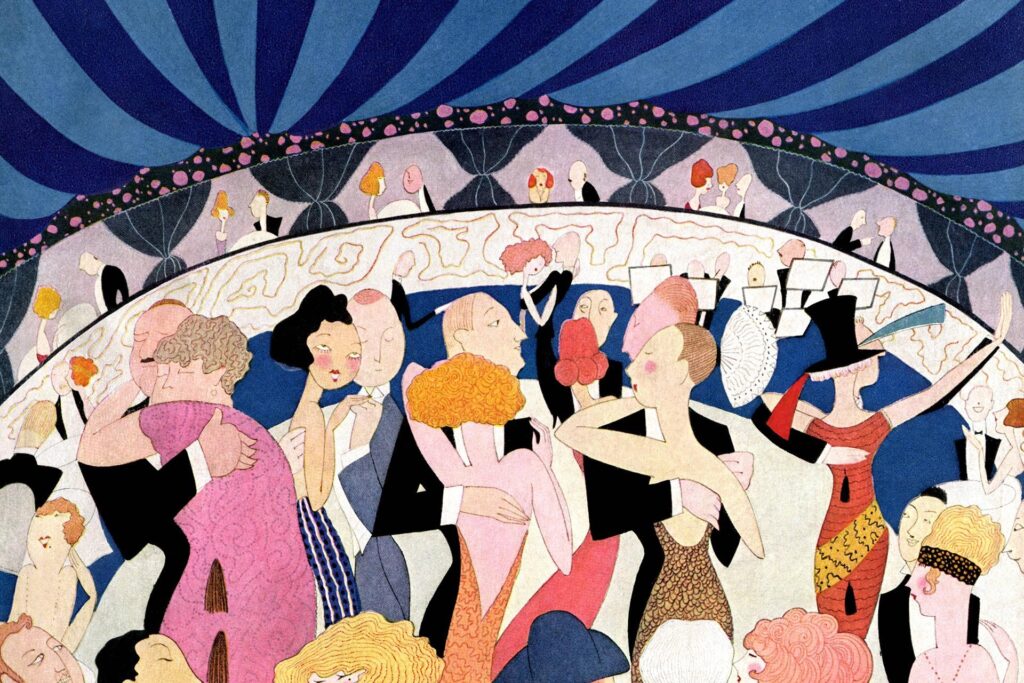
A loneliness epidemic is sweeping the United States. More than half of Americans report feeling isolated, and social gatherings are declining. In 2023, only about 4 percent of adults attended a party on a weekend or holiday.
Party historian Imogen Willetts argues this moment is an anomaly. In her book Up All Night: A History of Going Out, she traces how nightlife has shaped human society for centuries. She told Vox that drinking, dancing, and hedonism were once part of religion itself.
For most of history, religion absorbed hedonistic instincts. Medieval church services in England were rowdy affairs with drinking and dancing. Wooden pews were reportedly introduced at Wells Cathedral to subdue the revelry.
Modern nightlife began in seventeenth-century Japan. Commercial party districts like Yoshiwara, built on the outskirts of Edo, operated independently of both religion and the royal court. This marked a shift toward separate spaces for communal celebration.
Sociologist Émile Durkheim coined the term “collective effervescence” in 1912. It describes the euphoric feeling people experience during peak communal moments, from sports matches to concerts to dance floors. Parties provide access to this sensation, especially in increasingly secular societies.
Nightlife also drives cultural innovation. Abstract expressionist artists gathered at the Cedar Tavern in mid-century New York. The Viennese Secession Movement met at Cabaret Fledermaus. Dance styles like the can-can, disco, and techno all emerged from club culture.
Private homes have long served as party venues. Turn-of-the-century New Orleans hosted Saturday night fish fries, where families charged entry to cover rent. Harlem rent parties in the 1920s offered similar gatherings. Langston Hughes preferred them to cabarets and collected their invitations, now archived at Yale.
Great parties share key elements regardless of era. Willetts cites good music, good lighting, and an atmosphere where anything can happen. Guests should feel free to behave differently or act a little wild.
The appeal lies in shedding daily routines. A kitchen transformed into a cocktail bar or a living room turned dance floor creates satisfying disorder. That slight upheaval makes people feel alive.