


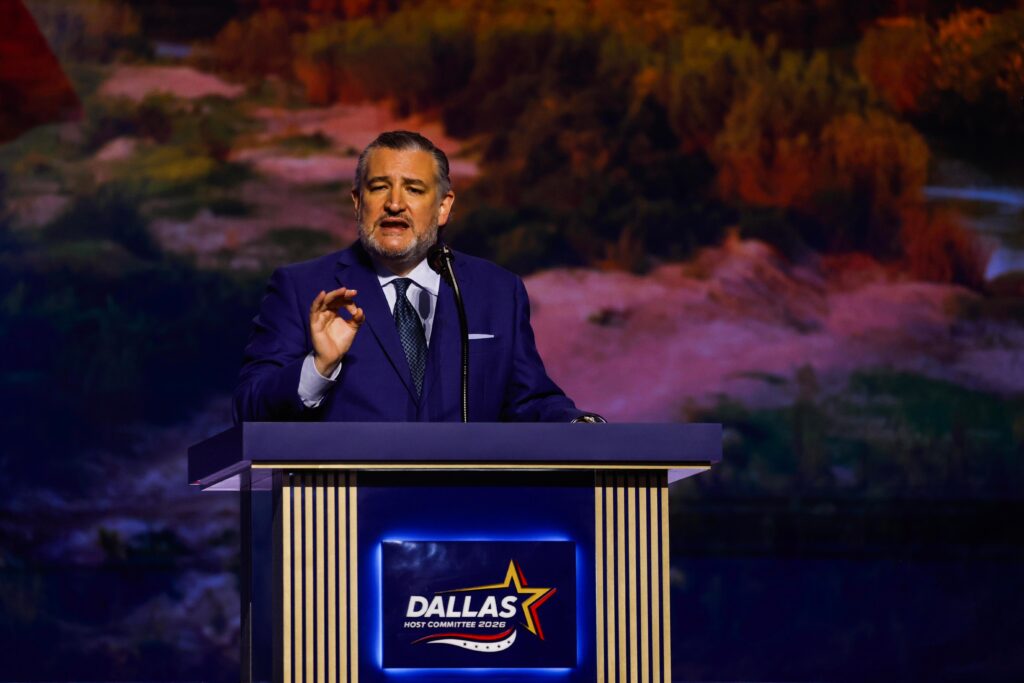
Anti-Muslim rhetoric has surged among Republican officials ahead of the midterm elections. The party’s Dallas convention last week placed the issue at the center of its messaging. Speakers warned of a leftist-Islamist alliance threatening the nation.
Sen. Ted Cruz described a “red-green alliance” of communists and Islamists taking over the Democratic Party. He said they hate Christians, Jews, capitalism, and the Constitution. Former Rep. Mike Rogers linked his Michigan opponent, Abdul El-Sayed, to the 9/11 attacks.
The convention followed a pattern of anti-Muslim statements from Republican lawmakers. Rep. Andy Ogles said Muslims do not belong in American society. Rep. Randy Fine called for more Islamophobia. Rep. Chip Roy said no more Muslims.
Indiana Lt. Gov. Micah Beckwith called Islam a demonic death cult. These remarks target prominent Muslim figures such as El-Sayed, Hasan Piker, and New York City Mayor Zohran Mamdani. Reps. Rashida Tlaib and Ilhan Omar have also faced attacks.
Republican lawmakers are pushing anti-Muslim legislation alongside the rhetoric. A new Sharia Free America Caucus in the House includes dozens of Republican members. Texas Republicans made banning sharia law an official party platform plank. Gov. Greg Abbott called for a federal probe of Muslim washing facilities at airports.
Journalist Rozina Ali told Vox that the post-October 7 period marked a turning point. Politicians began labeling the conflict a religious war. Sen. Lindsey Graham said the US was in a religious war, rhetoric even the Bush administration avoided after 9/11.
Muslim experts, scholars, and politicians have become more vocal about US foreign policy. Unlike the post-9/11 era, they are not sidelined or monitored as suspicious. Younger figures like El-Sayed and Mamdani criticize both foreign and domestic policy. Their unapologetic stance has drawn backlash.
Ali noted that criticism of America has long been contested. The Bush-era war on terror faced widespread support, and few critics were heard. Failures in Iraq, Afghanistan, and scandals like Abu Ghraib changed public trust. Deep distrust of institutions now allows more politicians to criticize the government.
Ali said the GOP’s vision centers on who loves America. Vice President JD Vance said America belongs to those who love it, not those who hate it. Ali called this a disconnect from public sentiment.
Former President Bill Clinton in 2016 placed conditions on Muslim acceptance. He said Muslims who love America and hate terror should stay and help. Ali said this conditionality has persisted and morphed. Vance can criticize America, but brown or Muslim figures cannot.
Ali warned that the GOP is combining labels into one narrative. Anyone against them is framed as Muslim, leftist, or immigrant. This creates a cultural, religious, and racial divide that is frightening.
Anti-Muslim sentiment has become a feature of American politics, Ali said. The GOP is testing whether it wins elections. It failed in the Mamdani campaign, and is now being tried in Michigan and elsewhere.
A more lasting effort aims to change laws regarding Muslim expression. Texas is framing Islam as a political ideology rather than a religion. Efforts to ban sharia and block visible Islam are ongoing. Success at the local level could lead to national action.
Ali said El-Sayed is easy to call all-American but his faith remains the first line of attack. She compared it to John F. Kennedy’s Catholicism, which faded over time. She said a similar shift for Muslims will take a generational change. It will not come organically. Concerted effort is needed to challenge anti-Muslim rhetoric from policymakers, which is not yet happening.