

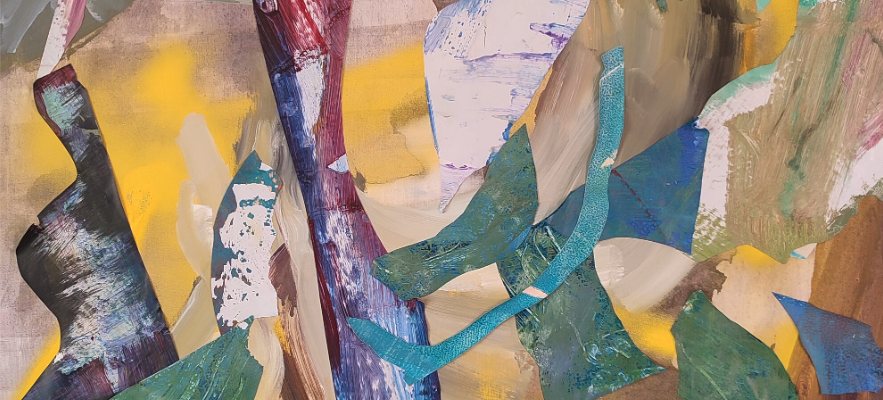
Artists in exile often face predictable questions about their work’s relationship to oppression and conflict. For many, this creates a pressure to produce art that is immediately legible to Western audiences. This demand for transparency can itself become a form of constraint.
The concept of opacity offers a powerful alternative. It challenges the colonial expectation that art must be easily understood or explained. Instead, it embraces ambiguity and complexity as valid artistic positions.
For Iranian artists working outside their homeland, opacity can function as a survival technique. It provides a protective layer against reductive interpretations. Their work is not required to serve as a straightforward political statement.
This approach is evident in the practice of artist Chohreh Feyzdjou. Her work resists being easily categorized or consumed. It asserts the right to remain partially inaccessible, challenging viewers to engage on its own terms.
Questioning transparency’s supposed purity becomes a radical act. It allows artists to control their own narratives. Their art is freed from the burden of explaining an entire culture or political situation.
Embracing incompleteness and ambiguity can be a form of intellectual resistance. It rejects the demand for art to be a transparent window into another world. The work remains sovereign, defined by its own internal logic.
This strategy protects the artist’s creative autonomy. It complicates the viewer’s experience, inviting deeper reflection rather than quick consumption. In doing so, it affirms art’s capacity to exist beyond simple explanation.