

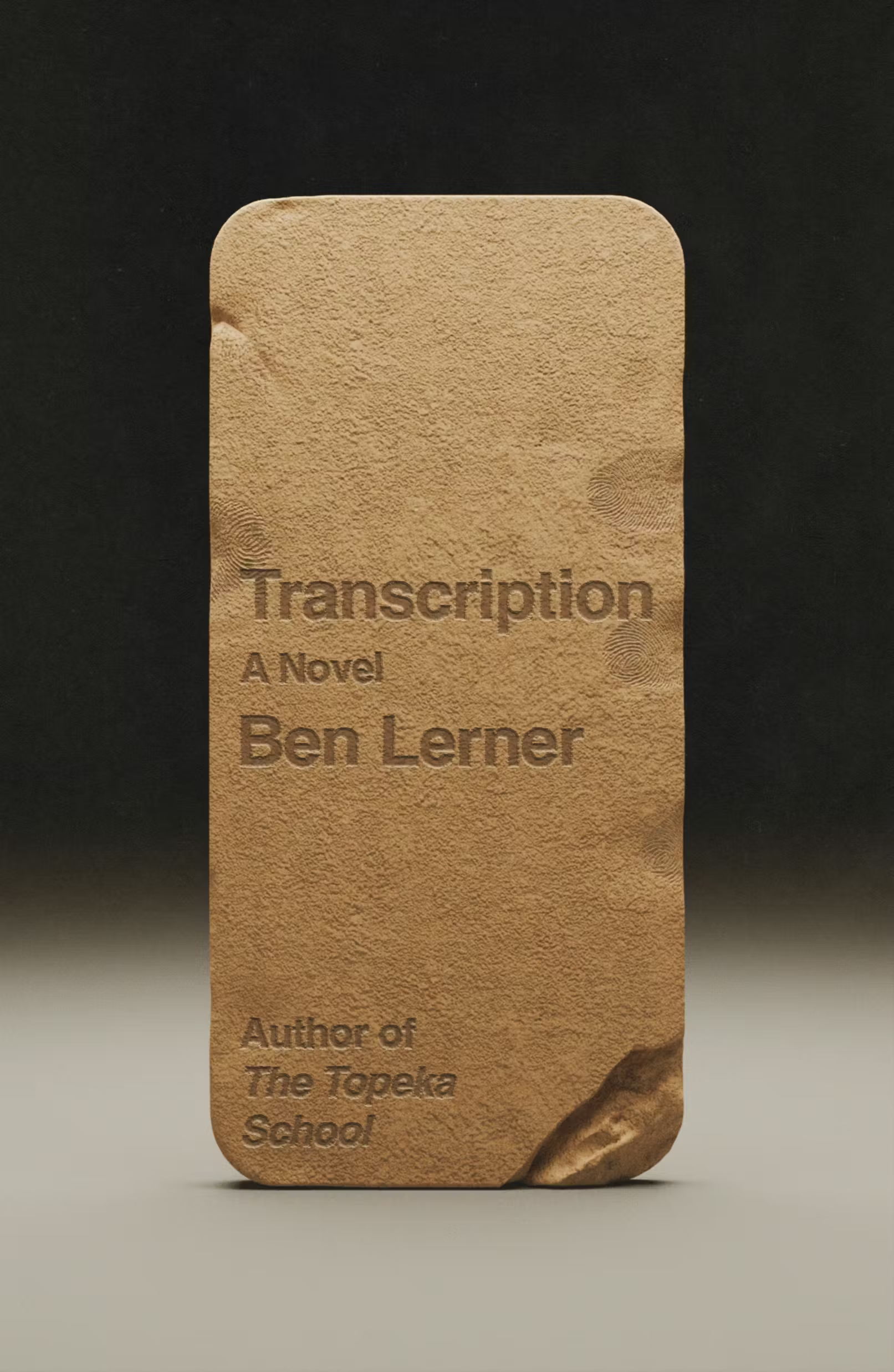
Ben Lerner’s latest novel, “Transcription,” arrives as a robust argument for the enduring power of the form. It demonstrates the novel’s unique capacity to dissect contemporary consciousness. The work engages deeply with the complexities of modern life and art.
The narrative explores themes of memory, authenticity, and artistic creation. Lerner’s prose meticulously examines the process of writing itself. This self-referential approach highlights literature’s ongoing relevance.
“Transcription” challenges conventional storytelling techniques. It blends autobiography with fiction in a compelling structural experiment. The result is a text that feels both intimate and analytically sharp.
Critics note the book’s ability to capture the nuances of digital-age perception. It addresses how technology mediates human experience and relationships. Lerner’s observations feel precisely attuned to the current moment.
The novel functions as a meditation on the act of reading. It invites readers to reflect on their own engagement with narrative. This metafictional layer reinforces the book’s central thesis about connection.
Through its intellectual rigor, the work avoids feeling arid or purely academic. It remains grounded in emotional and sensory detail. The balance ensures the narrative is both thought-provoking and accessible.
Ultimately, “Transcription” serves as vital proof of the novel’s continued necessity. It affirms the form’s role in navigating a fragmented world. Lerner’s contribution reinforces the novel as an essential tool for understanding.